Detailed description: Detailed description:
ATTENTION!
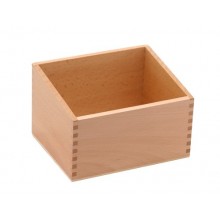
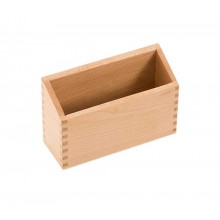
On delivery our items are not laminated and not cut. The organizational aids such as boxes, card index boxes and the like that may be shown in the catalog are not included in the scope of delivery. We only used this accessory for demonstration purposes.
pages 25th
leaves 25th
Age 7-11, 12-13
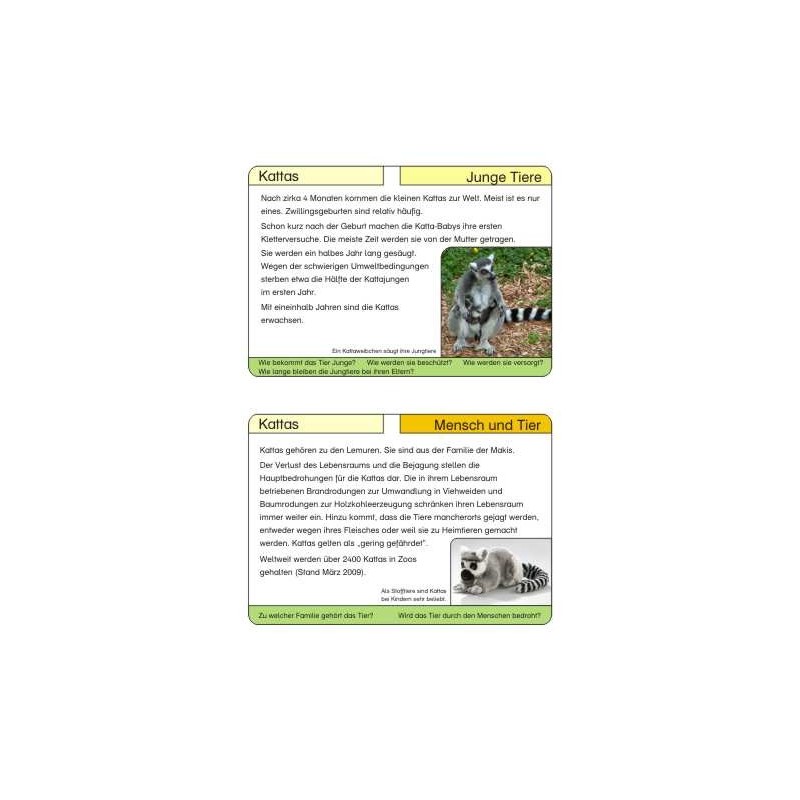
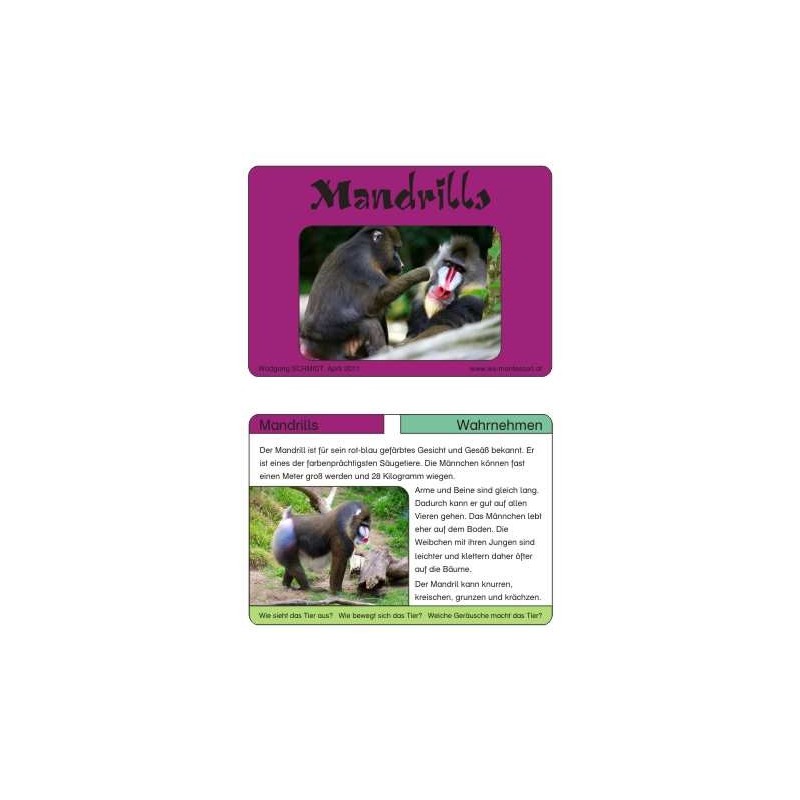
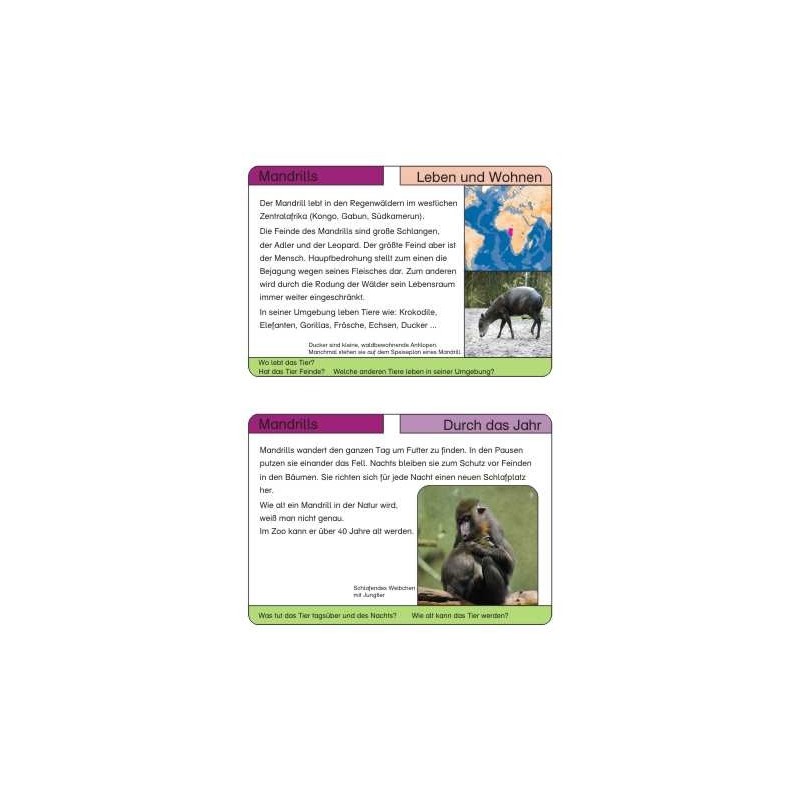
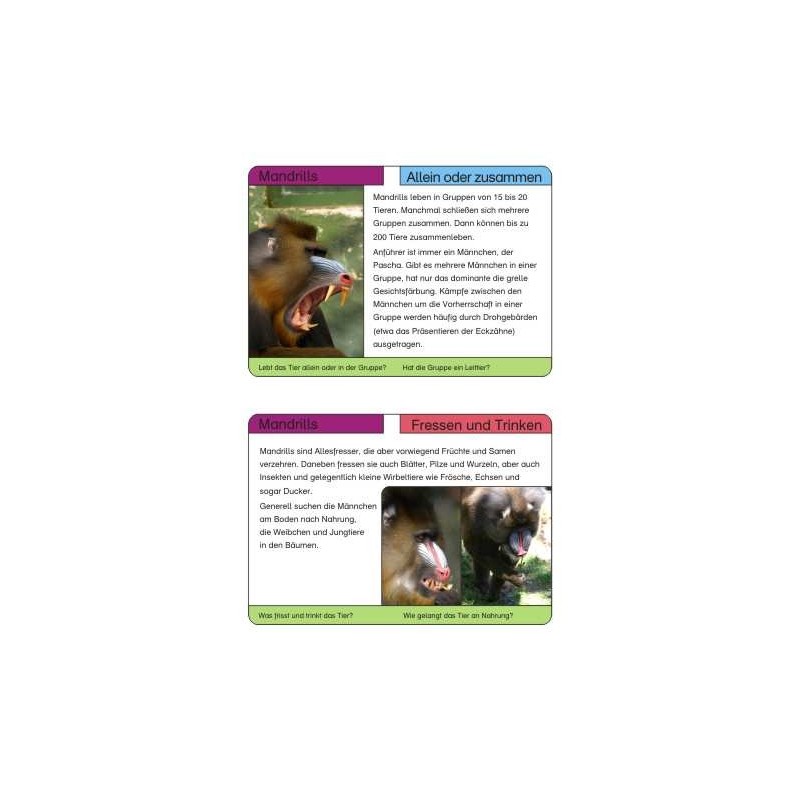
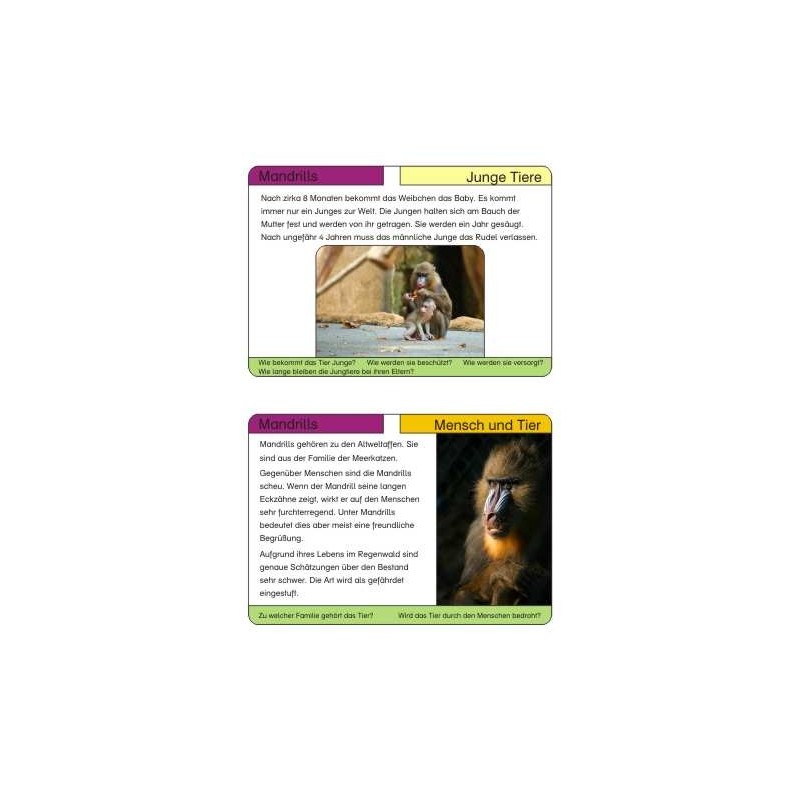
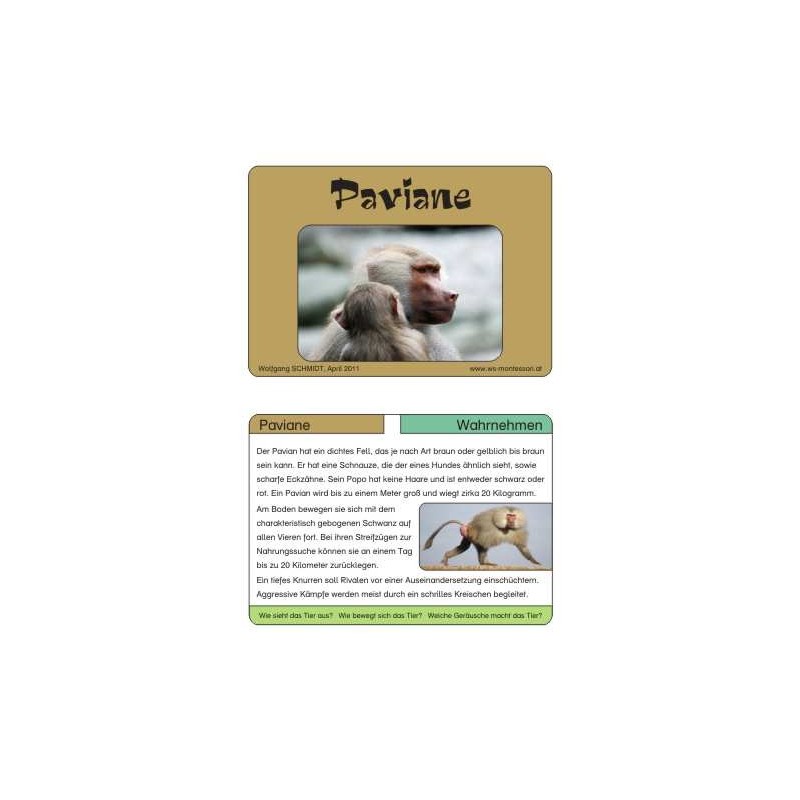
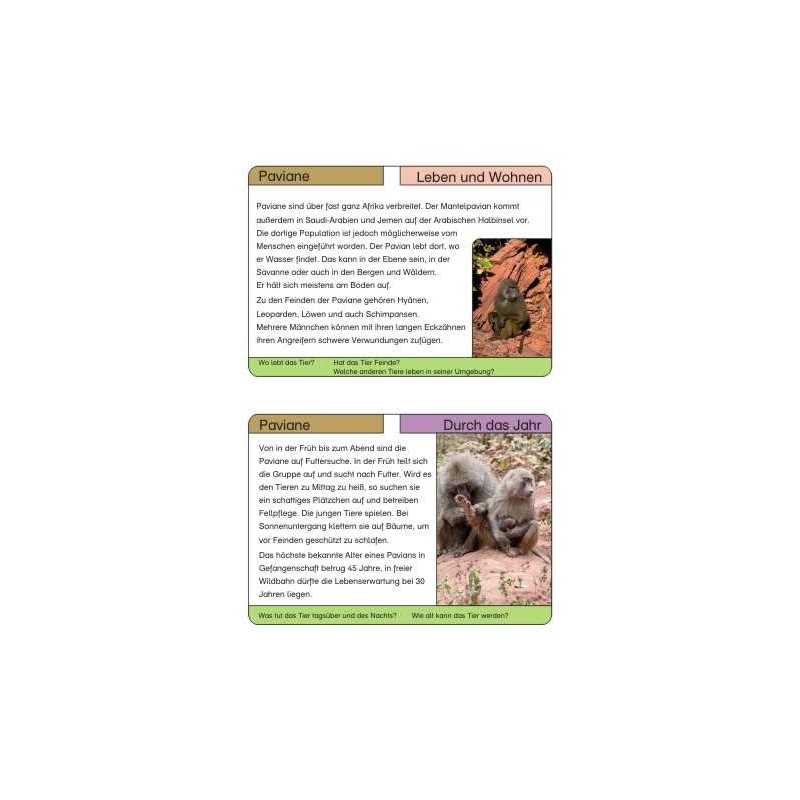
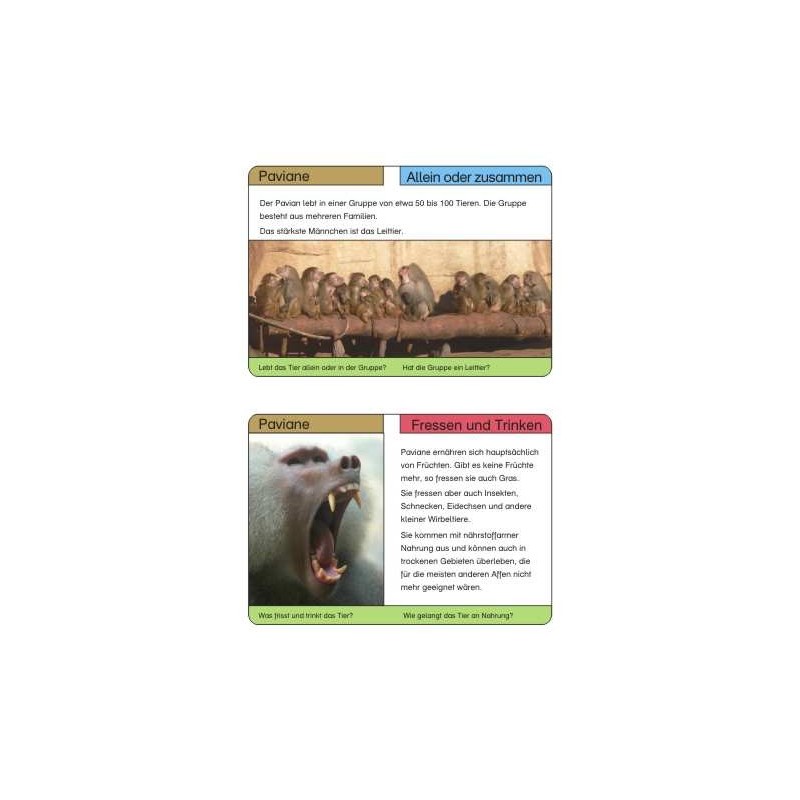
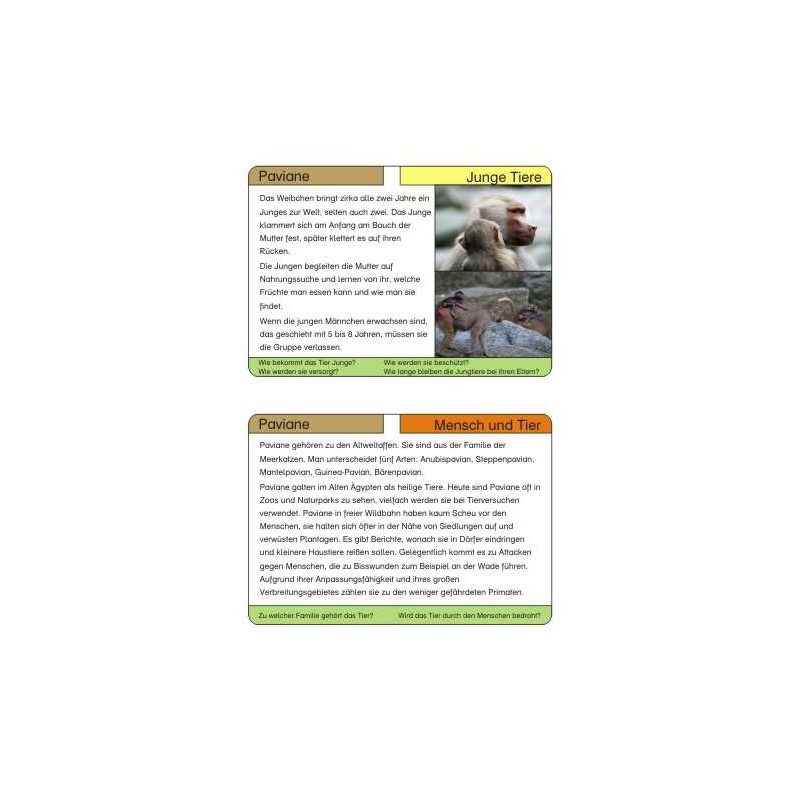
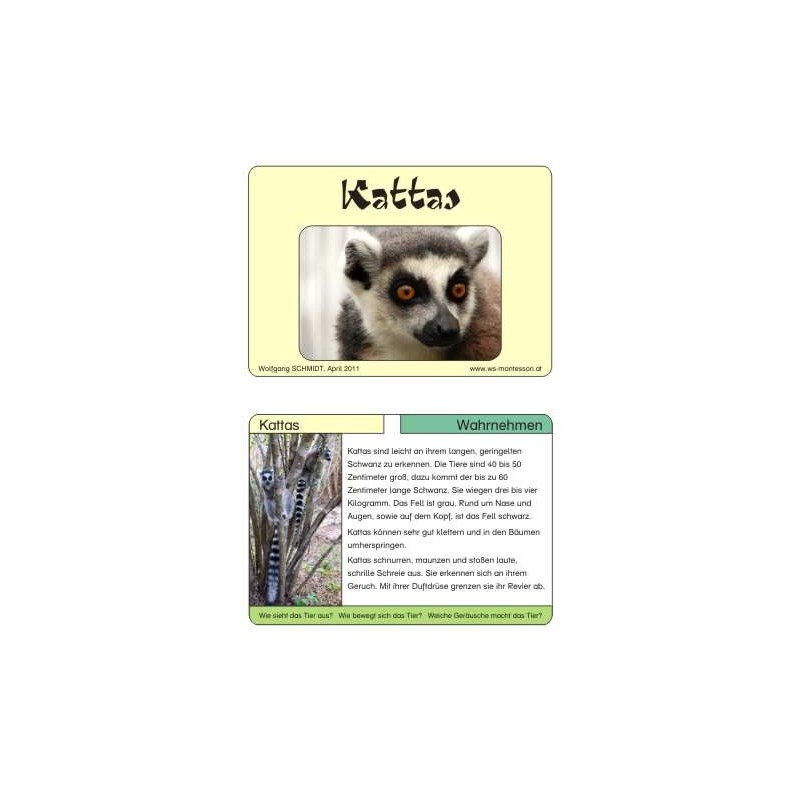
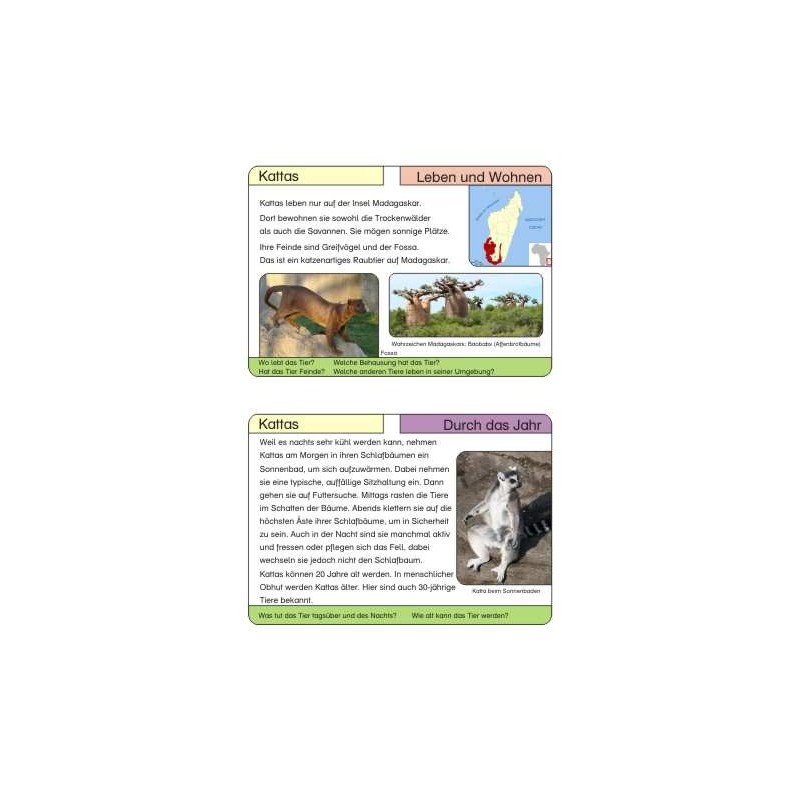
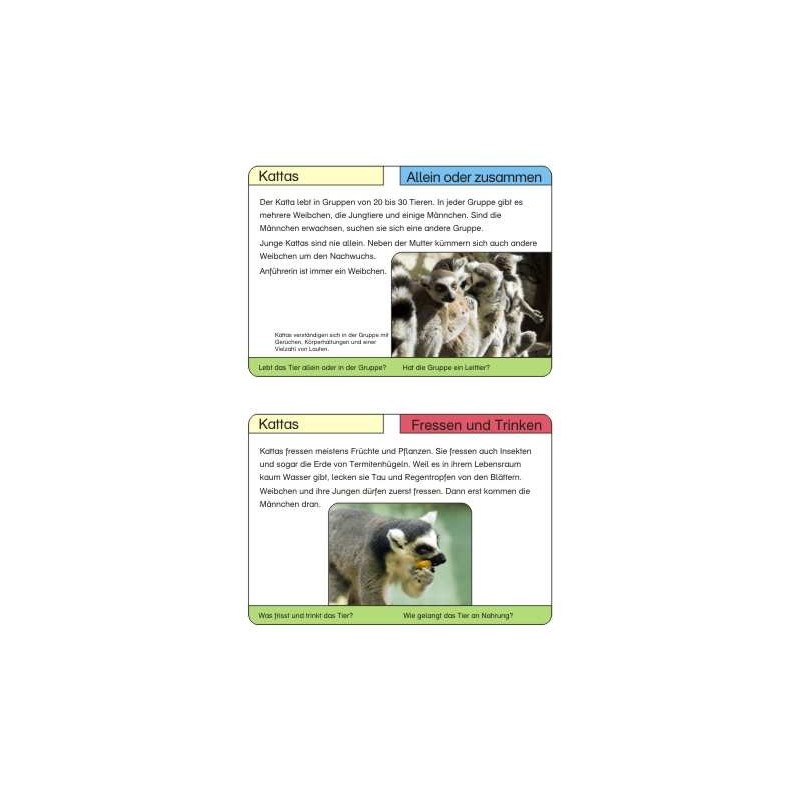
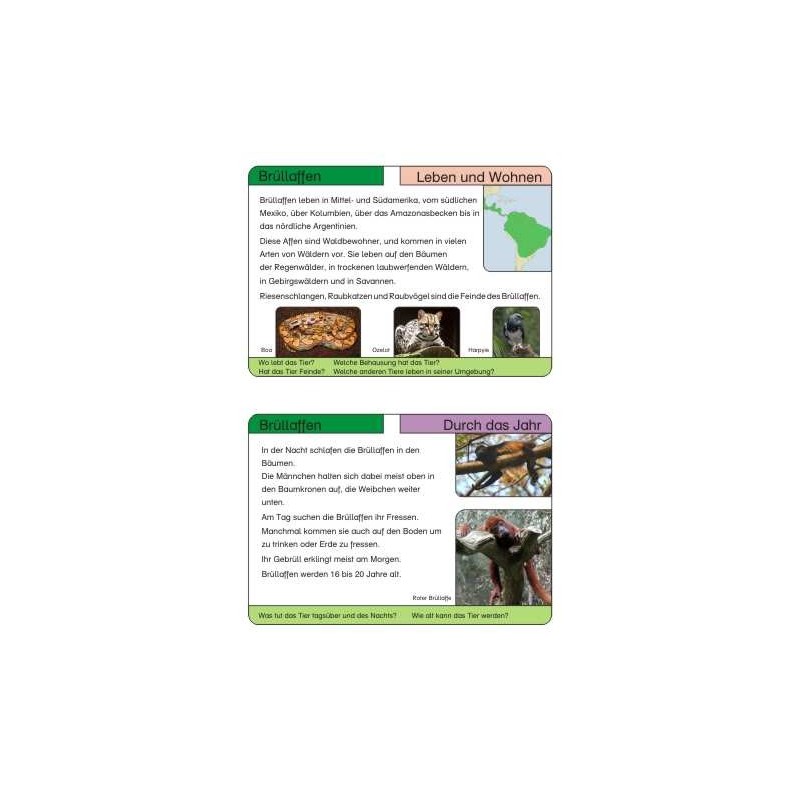
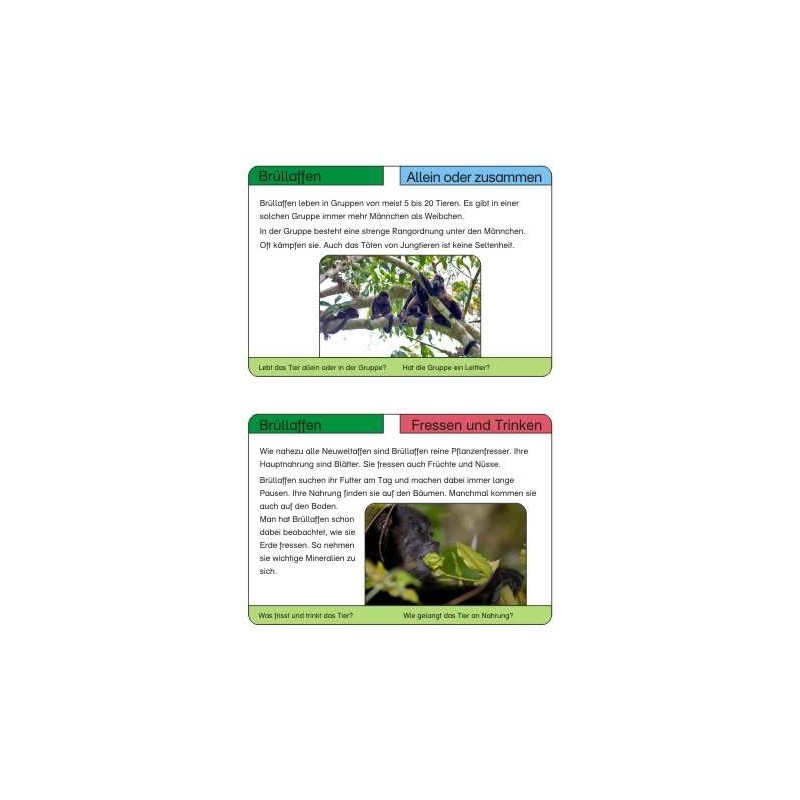
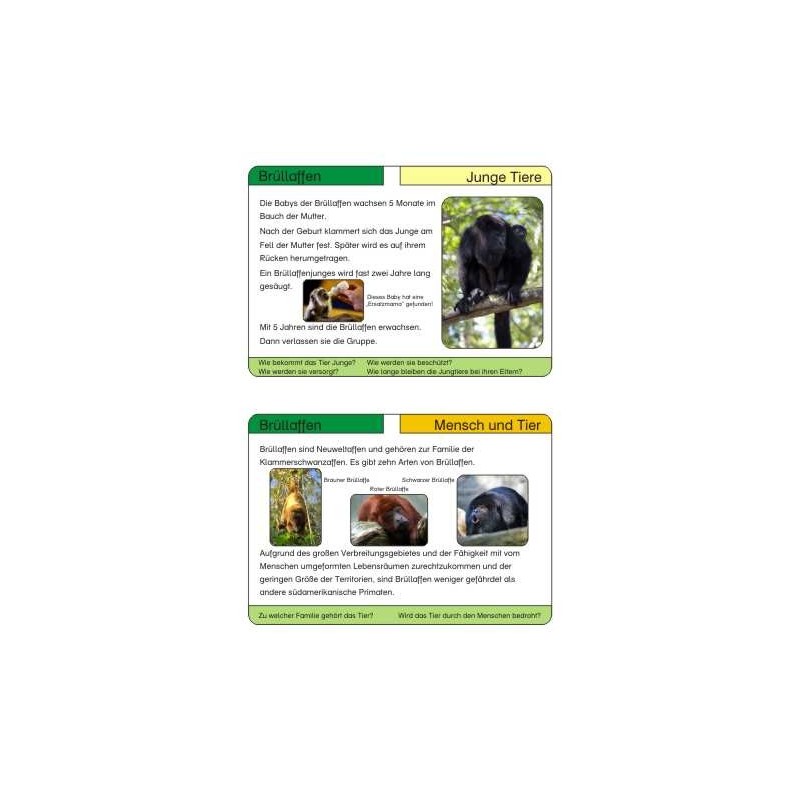
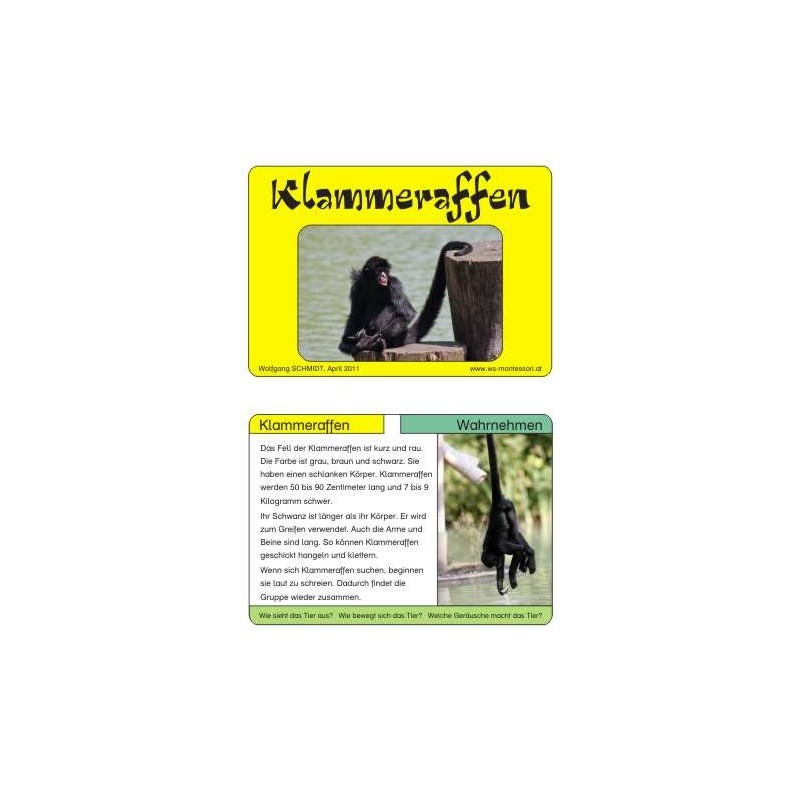
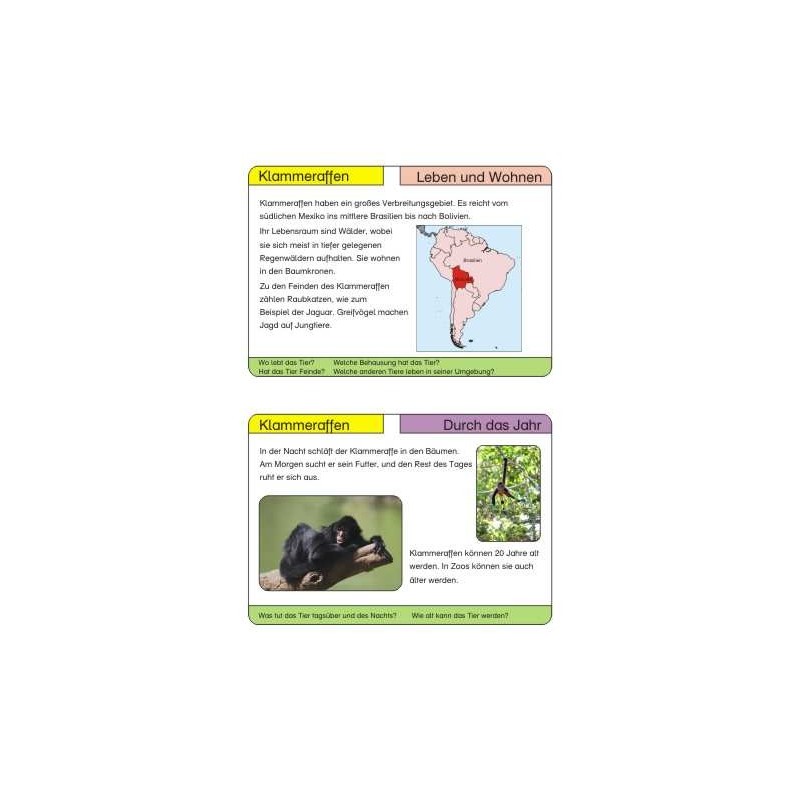
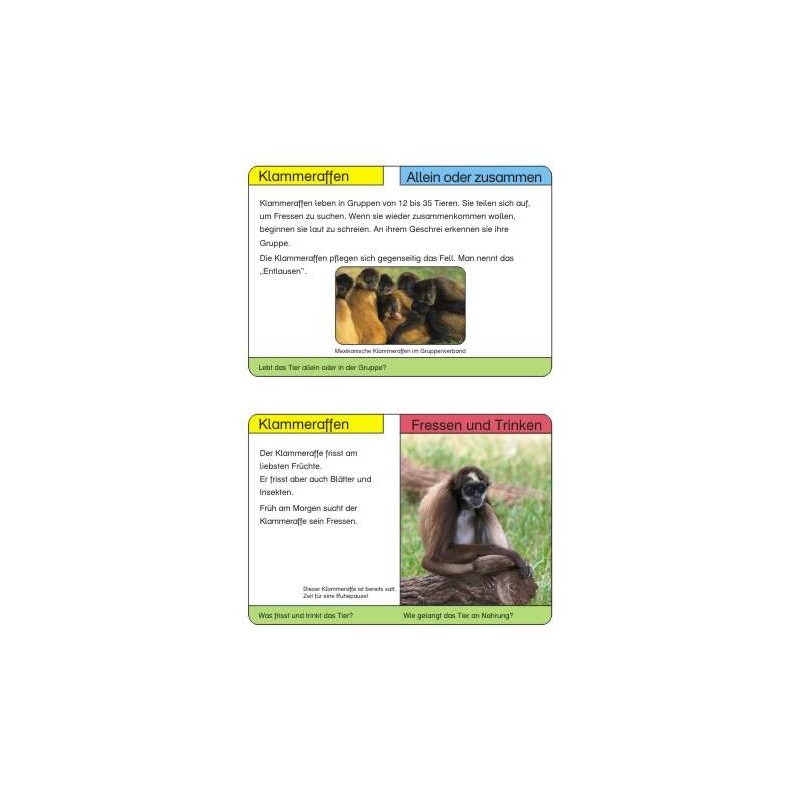
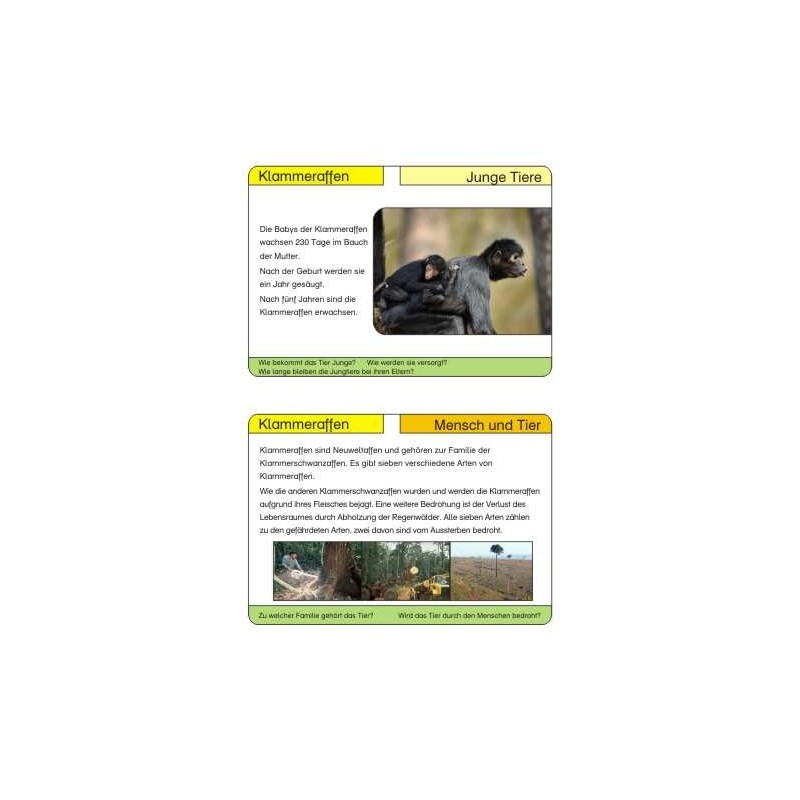
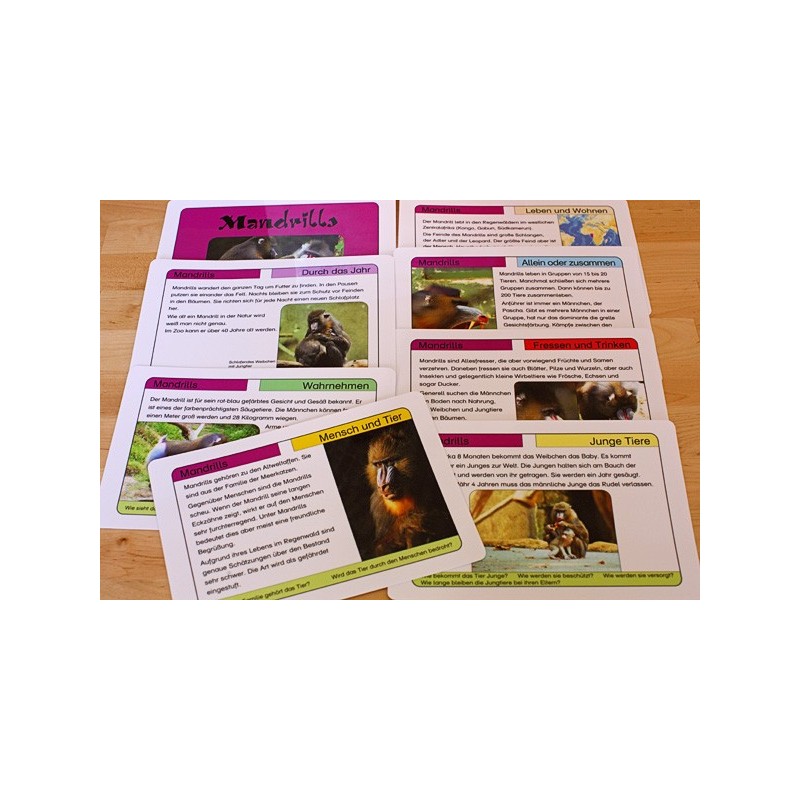
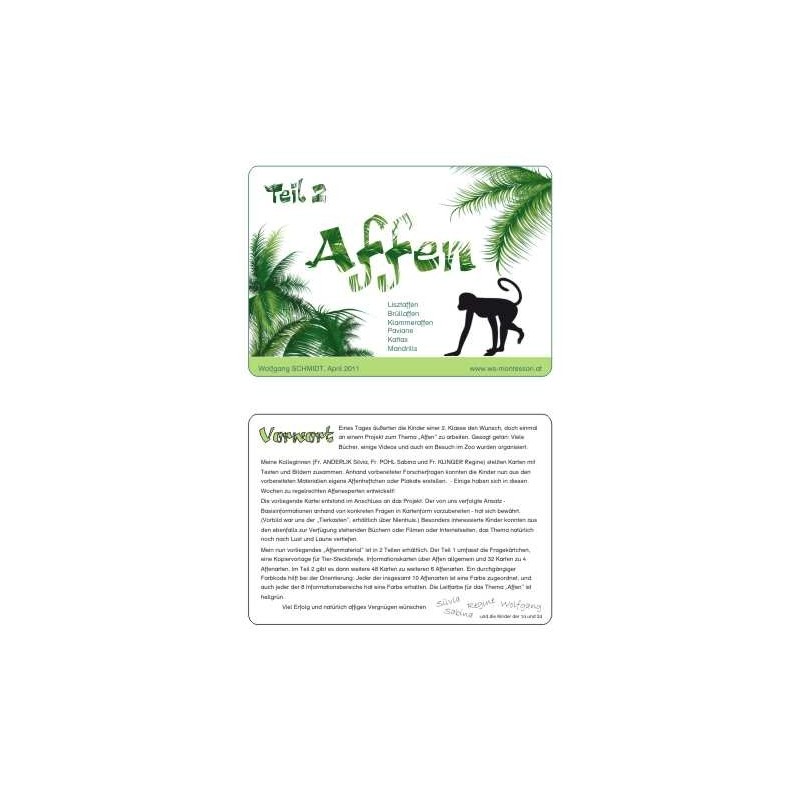
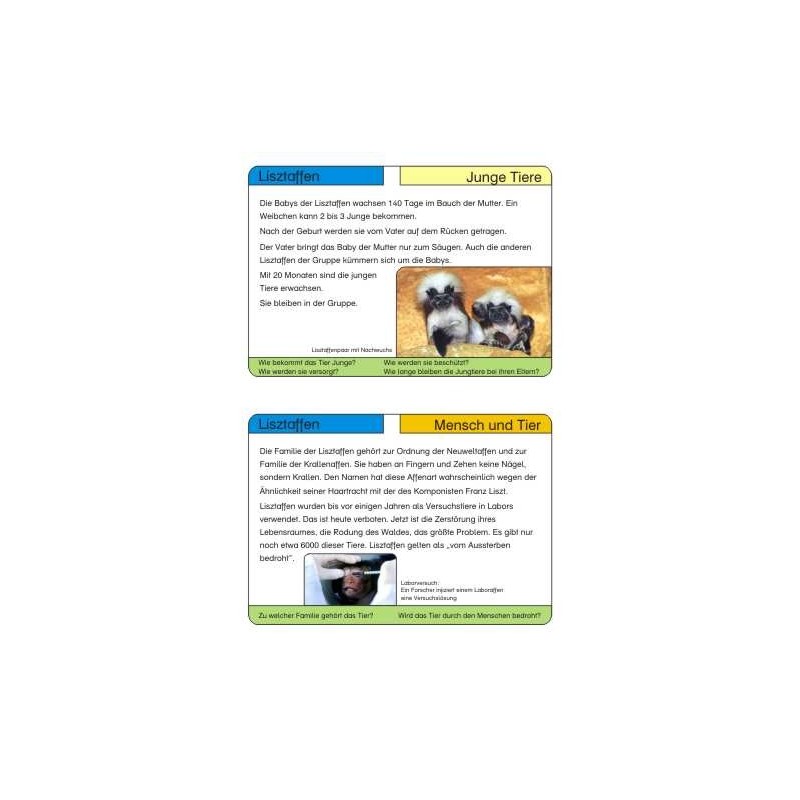
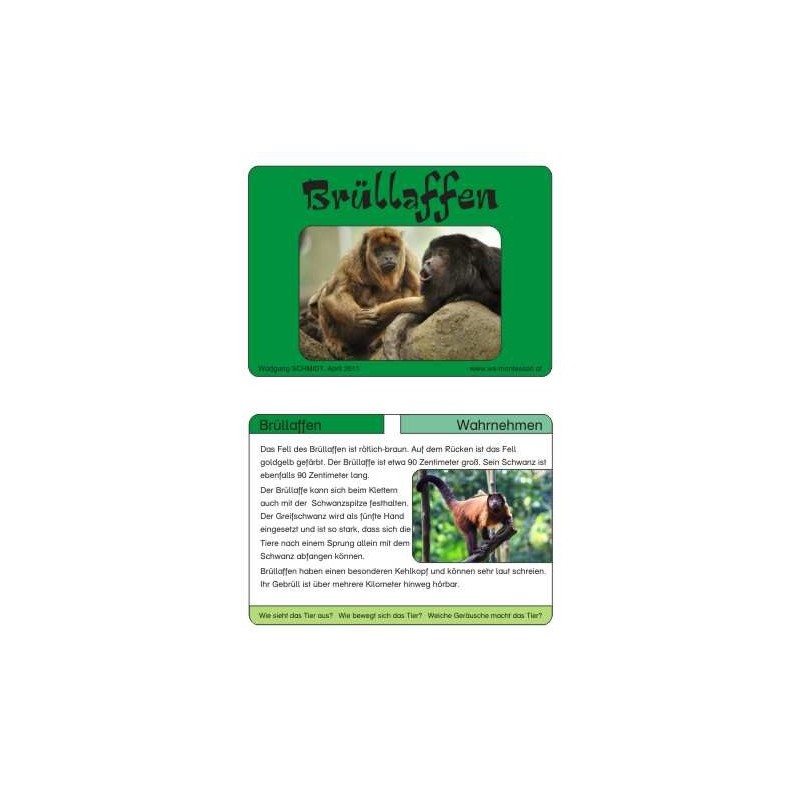
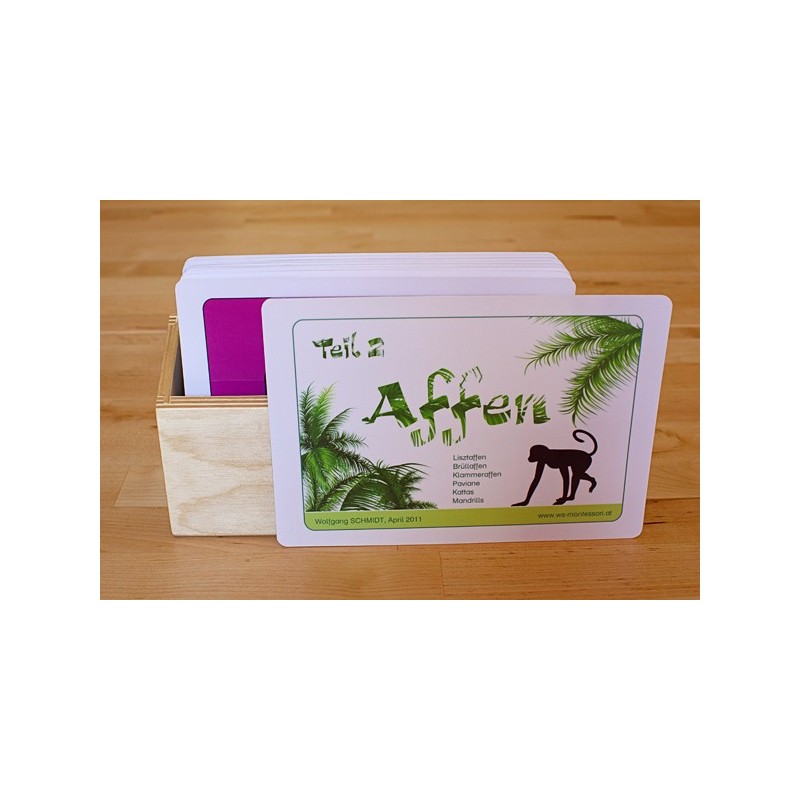
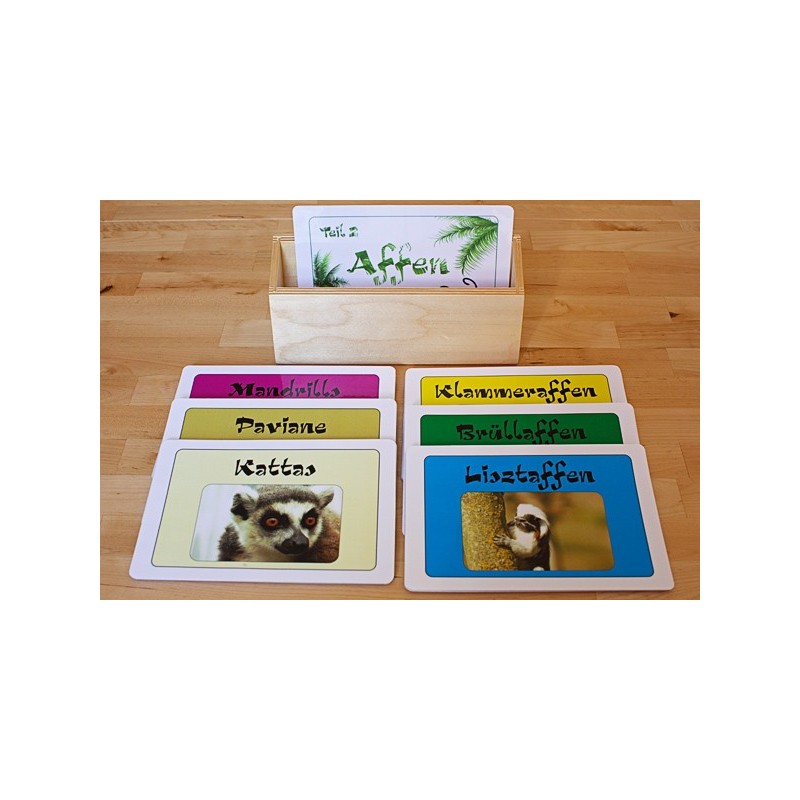
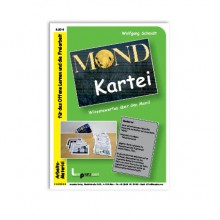
Brief description Lista monkeys, howler monkeys, spider monkeys, baboons, katas and mandrills are presented in words and pictures in this file. Part 2 is intended to complement Part 1 (Item No. 141035)
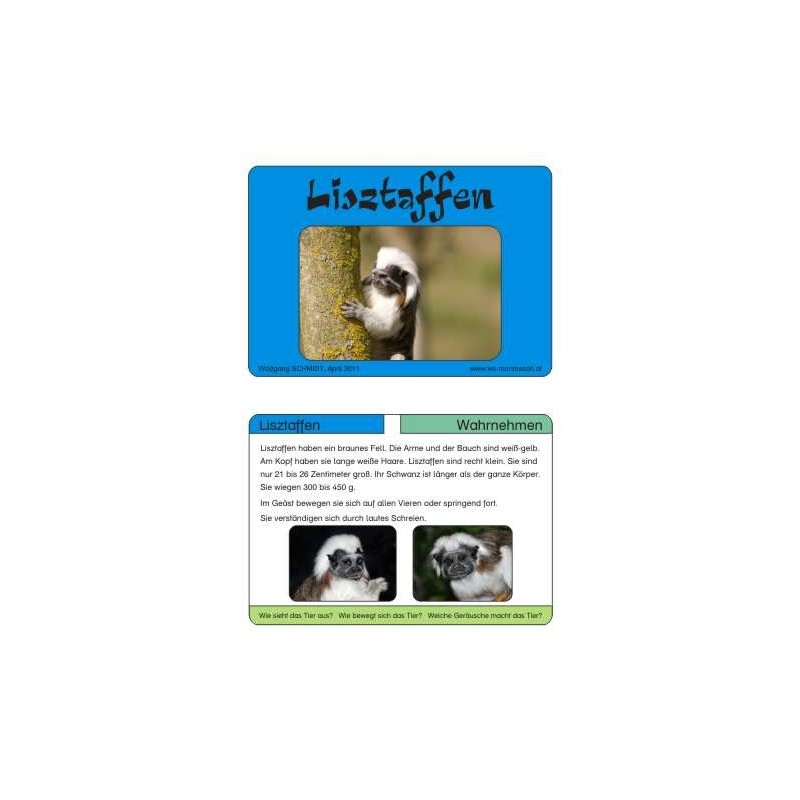
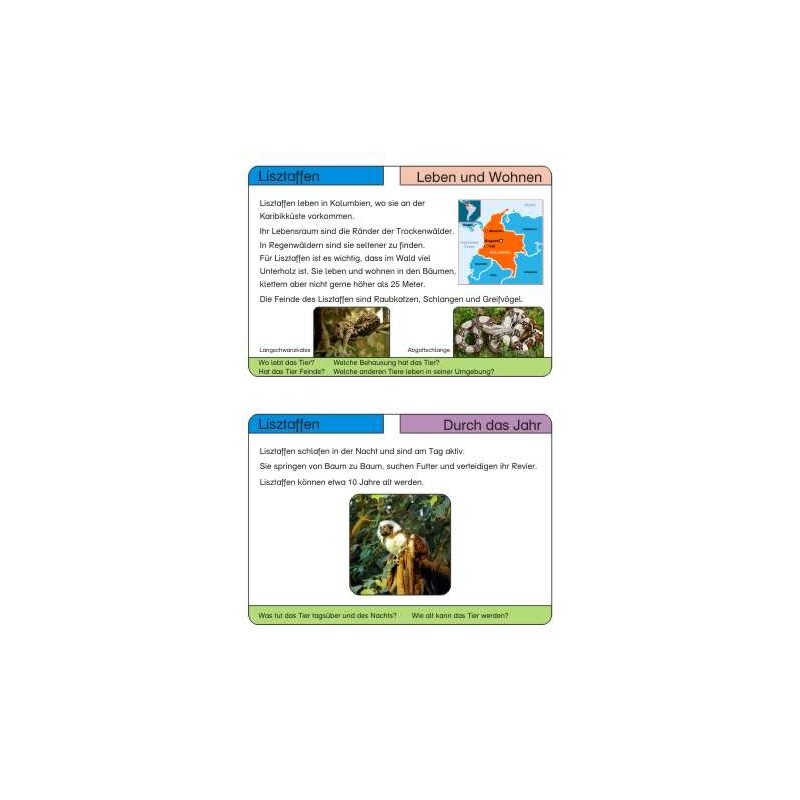
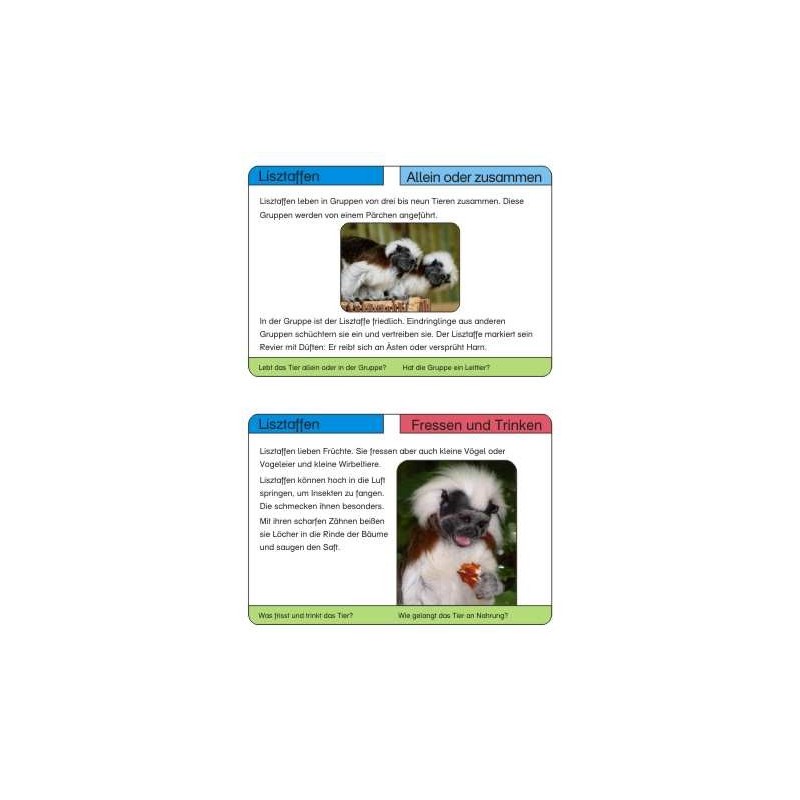
scope The material consists of: 48 index cards (A5), 1 cover card, 1 card with the foreword
Contributors ANDERLIK Silvia, POHL Sabina and KLINGER Regine
Additional articles Monkeys - part 1
manual Manufacturing: Laminate the sheets (recommended film thickness: 125 microns). In the case of the index cards (A5), first cut off the protruding laminating edge and then cut the A4 page in half exactly in the middle - each gives 2 A5 index cards
Pages not to be laminated: none
Pages or cards bound in a booklet: none
Content / curriculum reference: Vertebrates, mammals, monkeys, preparation for presentations
Possible uses: Possible use in the context of subject areas or projects, use in free work, in individual work, in partner work or small group work
Preparations: To work with this material, the children also need:
A work carpet, a work table, stationery, animal books, encyclopedias, ...
How it works: In collaboration with my colleagues (Mrs. ANDERLIK Silvia, Mrs. POHL Sabina and Mrs. KLINGER Regine) cards with texts and pictures were created and finally this file. This card index intends to prepare basic information based on specific questions in card form. Using these research questions, the children can create their own monkey booklets or posters from the prepared materials. Children who are particularly interested can of course deepen the topic as they please from other sources of information (books, films, websites, ...).
The cards for the systematic work (from part 1) enable the children to start their research: 7 chapters with different numbers of sub-chapters, eg 1. Perception - 1.1 What does the animal look like? 1.2 How does the animal move? 1.3 ...
Experiences, tips, tips: Part 1 includes the question cards, a template for animal profiles, information cards about monkeys in general and 32 cards for the 4 types of monkeys: gibbons, gorillas, chimpanzees and orangutans.
In this context, "Der Tierkasten" from Nienhuis is recommended. Here the systematic work is introduced using the example of the mallard duck. This material is available, for example, at www.pruefl.com.
In addition, the material "Vertebrates" (Item No. 141040) on ws-montessori.at
pages 25th
leaves 25th
Age 7-11, 12-13
Brief description Lista monkeys, howler monkeys, spider monkeys, baboons, katas and mandrills are presented in words and pictures in this file. Part 2 is intended to complement Part 1 (Item No. 141035)
scope The material consists of: 48 index cards (A5), 1 cover card, 1 card with the foreword
Contributors ANDERLIK Silvia, POHL Sabina and KLINGER Regine
Additional articles Monkeys - part 1
manual Manufacturing: Laminate the sheets (recommended film thickness: 125 microns). In the case of the index cards (A5), first cut off the protruding laminating edge and then cut the A4 page in half exactly in the middle - each gives 2 A5 index cards
Pages not to be laminated: none
Pages or cards bound in a booklet: none
Content / curriculum reference: Vertebrates, mammals, monkeys, preparation for presentations
Possible uses: Possible use in the context of subject areas or projects, use in free work, in individual work, in partner work or small group work
Preparations: To work with this material, the children also need:
A work carpet, a work table, stationery, animal books, encyclopedias, ...
How it works: In collaboration with my colleagues (Mrs. ANDERLIK Silvia, Mrs. POHL Sabina and Mrs. KLINGER Regine) cards with texts and pictures were created and finally this file. This card index intends to prepare basic information based on specific questions in card form. Using these research questions, the children can create their own monkey booklets or posters from the prepared materials. Children who are particularly interested can of course deepen the topic as they please from other sources of information (books, films, websites, ...).
The cards for the systematic work (from part 1) enable the children to start their research: 7 chapters with different numbers of sub-chapters, eg 1. Perception - 1.1 What does the animal look like? 1.2 How does the animal move? 1.3 ...
Experiences, tips, tips: Part 1 includes the question cards, a template for animal profiles, information cards about monkeys in general and 32 cards for the 4 types of monkeys: gibbons, gorillas, chimpanzees and orangutans.
In this context, "Der Tierkasten" from Nienhuis is recommended. Here the systematic work is introduced using the example of the mallard duck. This material is available, for example, at www.pruefl.com.
In addition, the material "Vertebrates" (Item No. 141040) on ws-montessori.at